Schizophrenia: Dopamine Excess, NMDA Hypofunction, and the Metabolic Pathway to Recovery
Schizophrenia involves two interacting neurochemical disruptions — mesolimbic dopamine excess and prefrontal NMDA hypofunction — both downstream of mitochondrial dysfunction and oxidative stress. Five cases where metabolic intervention provided meaningful improvement alongside antipsychotic medication.
TL;DR
Mesolimbic DA hyperactivity, prefrontal NMDA hypofunction, oxidative stress, mitochondrial dysfunction. Ketones reduce ROS, raise glutathione. Five cases: first episode, treatment-resistant positive, negative-dominant, metabolic syndrome, schizoaffective.





The physiology
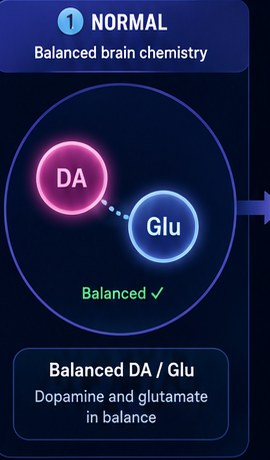
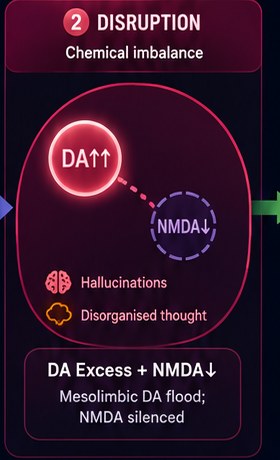
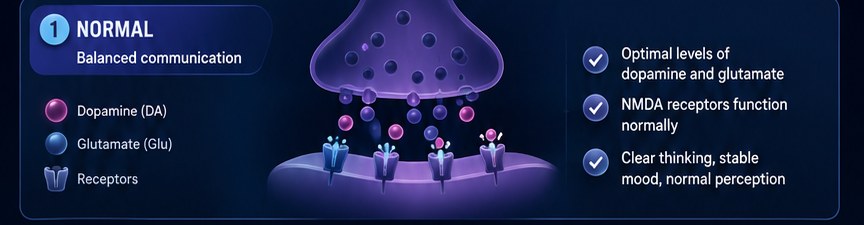
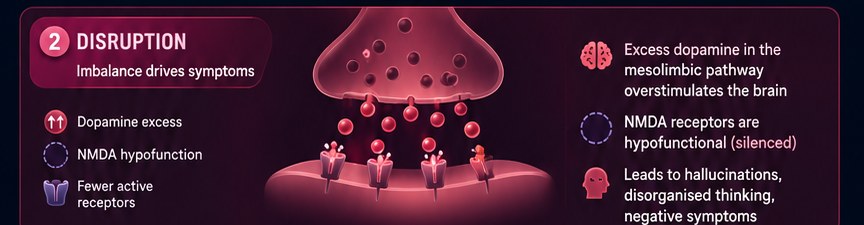
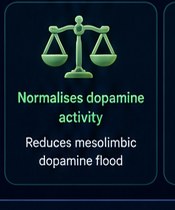
Schizophrenia involves two interacting neurochemical disruptions. The mesolimbic dopamine pathway becomes hyperactive — flooding the nucleus accumbens with dopamine and generating the positive symptoms of psychosis: hallucinations, delusions, and disorganised thinking. Simultaneously, NMDA glutamate receptors in the prefrontal cortex become hypoactive — producing the negative symptoms of schizophrenia: flat affect, social withdrawal, and cognitive impairment. These disruptions are downstream consequences of mitochondrial dysfunction, oxidative stress, and neuroinflammation that begin at the cellular level.
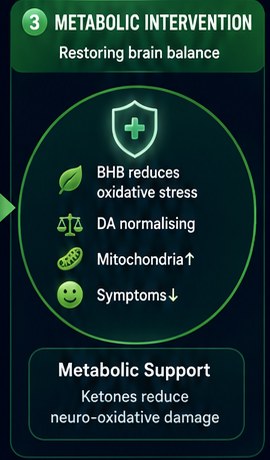
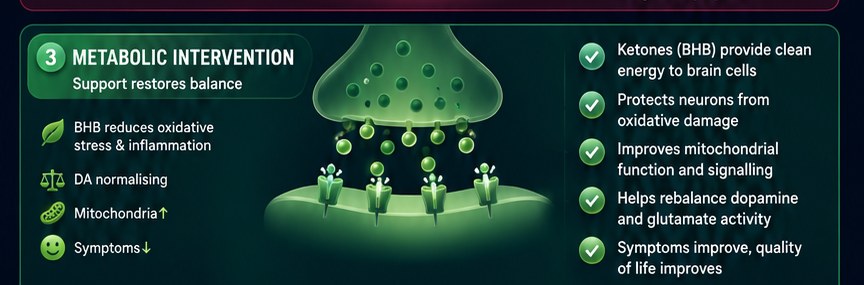
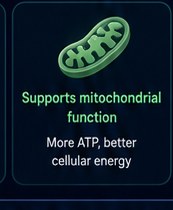
Schizophrenic brains show elevated markers of oxidative damage — higher lipid peroxidation and lower glutathione levels than controls — and impaired glucose metabolism particularly in the frontal lobes. Ketones reduce mitochondrial reactive oxygen species production, increase glutathione synthesis, and improve the frontal hypometabolism that underlies negative symptoms. Clinical case series from Harvard's metabolic psychiatry group document schizophrenia patients achieving sustained symptom reduction on ketogenic diet as an adjunct to antipsychotic medication.
Five stories
Amara — First-episode psychosis
Amara, 23, developed her first psychotic episode during university examinations — auditory hallucinations and the firm belief that her peers were surveilling her. She was hospitalised and started on an antipsychotic. Her treatment team also referred her to a metabolic psychiatrist who introduced ketogenic nutrition alongside the medication. Her recovery was faster than the ward average; she returned to university within four months and has remained episode-free for two years on the combination approach.
Kwame — Treatment-resistant positive symptoms
Kwame, 35, had continuous auditory hallucinations despite trialling four antipsychotic medications. His metabolic workup revealed severely elevated oxidative stress markers and impaired glucose metabolism on PET imaging. A ketogenic diet was introduced under close medical supervision. The hallucinations did not vanish but their frequency and intensity diminished by approximately 40% over six months. His psychiatrist describes the improvement as clinically significant — more than any medication change had produced.
Yuki — Negative symptoms as primary burden
Yuki, 29, had minimal positive symptoms but was profoundly impaired by negative symptoms — flat affect, inability to initiate activity, social disconnection. Standard antipsychotics did nothing for these. A ketogenic intervention, targeting the frontal hypometabolism documented on her PET scan, produced gradual improvement in motivation and social engagement over eight months. Her psychiatrist notes that negative symptoms, historically the most medication-resistant features of schizophrenia, are the domain most responsive to metabolic intervention.
Petra — Schizophrenia with metabolic syndrome
Petra, 41, had developed metabolic syndrome from years on atypical antipsychotics — obesity, hypertension, and pre-diabetes. Her psychiatrist recognised that the metabolic damage was likely worsening her psychiatric symptoms through increased neuroinflammation. A ketogenic diet reversed the metabolic syndrome within six months while simultaneously improving her psychiatric stability. She is now on the lowest antipsychotic dose since her initial diagnosis.
Leo — Schizoaffective disorder
Leo, 32, had schizoaffective disorder — psychotic symptoms combined with mood cycling. His treatment team introduced ketogenic nutrition as a combined intervention targeting both the psychotic and mood components. The mood swings stabilised first, within three months. The psychotic symptoms — paranoid ideation rather than hallucinations — reduced over the following six months. His case is now cited in a metabolic psychiatry case series as an example of dual-mechanism benefit.