Depression: The Metabolic and Inflammatory Roots of Persistent Low Mood
Depression is not a serotonin deficiency. It is a disease of the HPA axis, mitochondrial dysfunction, and neuroinflammation. Five people who found remission through metabolic and ketogenic psychiatry.
TL;DR
HPA overactivation, serotonin depletion, neuroinflammation. Ketogenic therapy raises BDNF, reduces IL-6, restores PFC energy. Five cases: treatment-resistant, postpartum, seasonal, adolescent, burnout-precipitated.
The physiology
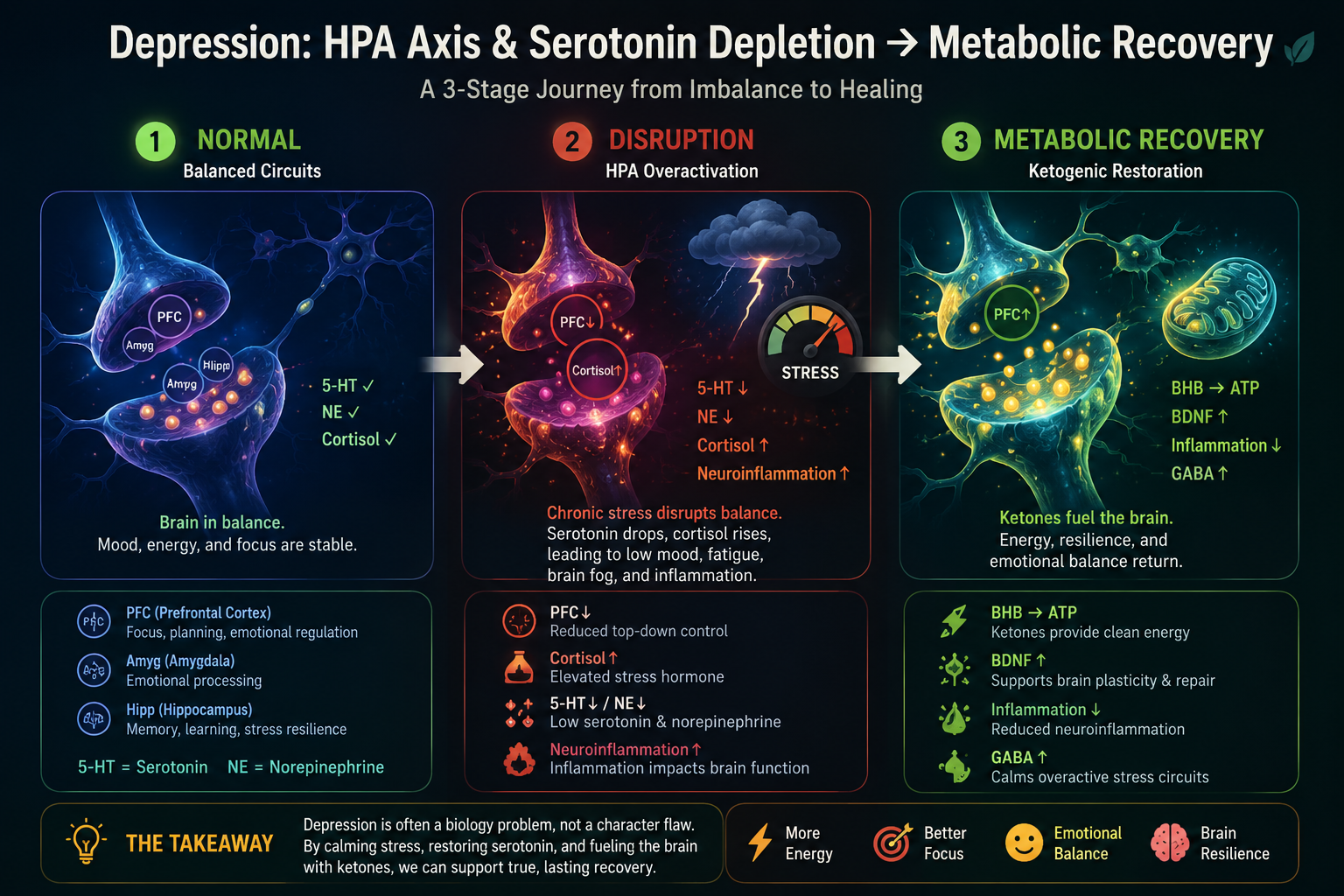
Depression is not a serotonin deficiency in any simple sense. The hypothalamic-pituitary-adrenal axis — the brain's stress response system — becomes chronically overactivated, flooding circuits with cortisol and suppressing the very prefrontal regions responsible for regulating mood and thought. Mitochondrial dysfunction in neurons reduces the ATP available for neurotransmitter synthesis. Neuroinflammation — elevated IL-6, TNF-α, C-reactive protein — directly impairs serotonin synthesis and reuptake. The result is a circuit that has lost its metabolic underpinning, not merely its chemistry.
"We're starting to see some pretty impressive results from ketogenic therapy to treat serious mental illness, bipolar disorder, schizophrenia, major depressive disorder, and others."
Ketogenic therapy addresses depression through three converging pathways: beta-hydroxybutyrate (BHB) provides an alternative fuel that bypasses impaired glucose metabolism in the prefrontal cortex; ketosis reduces neuroinflammation via NLRP3 inflammasome inhibition; and the metabolic shift increases BDNF — brain-derived neurotrophic factor — which supports synaptic plasticity and neurogenesis in the hippocampus.
Five stories
Marcus — Treatment-resistant depression
Marcus, 38, had been on four different antidepressants across a decade. Each worked for a period and then stopped. He described his depression as a constant grey ceiling — not acute suffering, but a permanent reduction in colour. His psychiatrist added a strict ketogenic diet as an adjunct. Within eight weeks Marcus noticed a distinct brightening. The grey ceiling did not lift immediately but over six months it dissolved. He remains on a low dose of medication but attributes the change primarily to the metabolic shift.
Elena — Postpartum depression
Elena developed severe postpartum depression after her second child. Antidepressants helped her function but left her feeling blunted. She began ketogenic eating while breastfeeding under medical supervision. The inflammation markers in her blood — she had been tracked as a research subject — dropped markedly within twelve weeks. Her mood stabilised and, critically, she felt present for her child in a way the medication had not enabled.
Theo — Seasonal affective disorder
Theo, 29, dreaded November every year. His SAD required light therapy and medication just to keep him functional through winter. A metabolic psychiatrist suggested pairing ketogenic nutrition with his existing protocol. The first winter on the combined approach he noticed the seasonal crash did not arrive with its usual force. He describes it as the floor of his mood being raised several feet.
Vera — Adolescent depression with brain fog
Vera, 16, was referred to a specialist after a year of worsening depression and inability to concentrate at school. Neuroimaging showed hypometabolism in her prefrontal cortex. Her family adopted a ketogenic diet together. Within three months her school performance had recovered and the persistent brain fog — described by her teachers as a different person appearing in class — had cleared. Her psychiatrist reduced her medication at the six-month mark.
Juno — Burnout-precipitated depression
Juno, 44, collapsed into depression after a period of extreme professional stress. She resisted pharmaceutical intervention initially, preferring to understand the mechanism. Working with a metabolic medicine practitioner, she implemented ketogenic nutrition alongside sleep restructuring. Her inflammatory markers — CRP had been elevated — normalised within ten weeks. She describes the recovery as more complete than anything she had experienced with previous medication trials.