Alzheimer's Disease: Brain Insulin Resistance and the Ketone Rescue
Alzheimer's disease is increasingly understood as type 3 diabetes — brain insulin resistance that starves neurons of glucose decades before clinical symptoms appear. Five people who used ketones to bypass the failed glucose transport and slow the decline.
TL;DR
Brain insulin resistance, GLUT1/3 failure, FDG-PET hypometabolism in temporal/parietal lobes. BHB bypasses insulin resistance via MCT1. Bredesen MEND protocol, Mary Newport MCT case. Five cases: early-onset, MCI, APOE4 prevention, T2D comorbid, caregiver-implemented.
The physiology
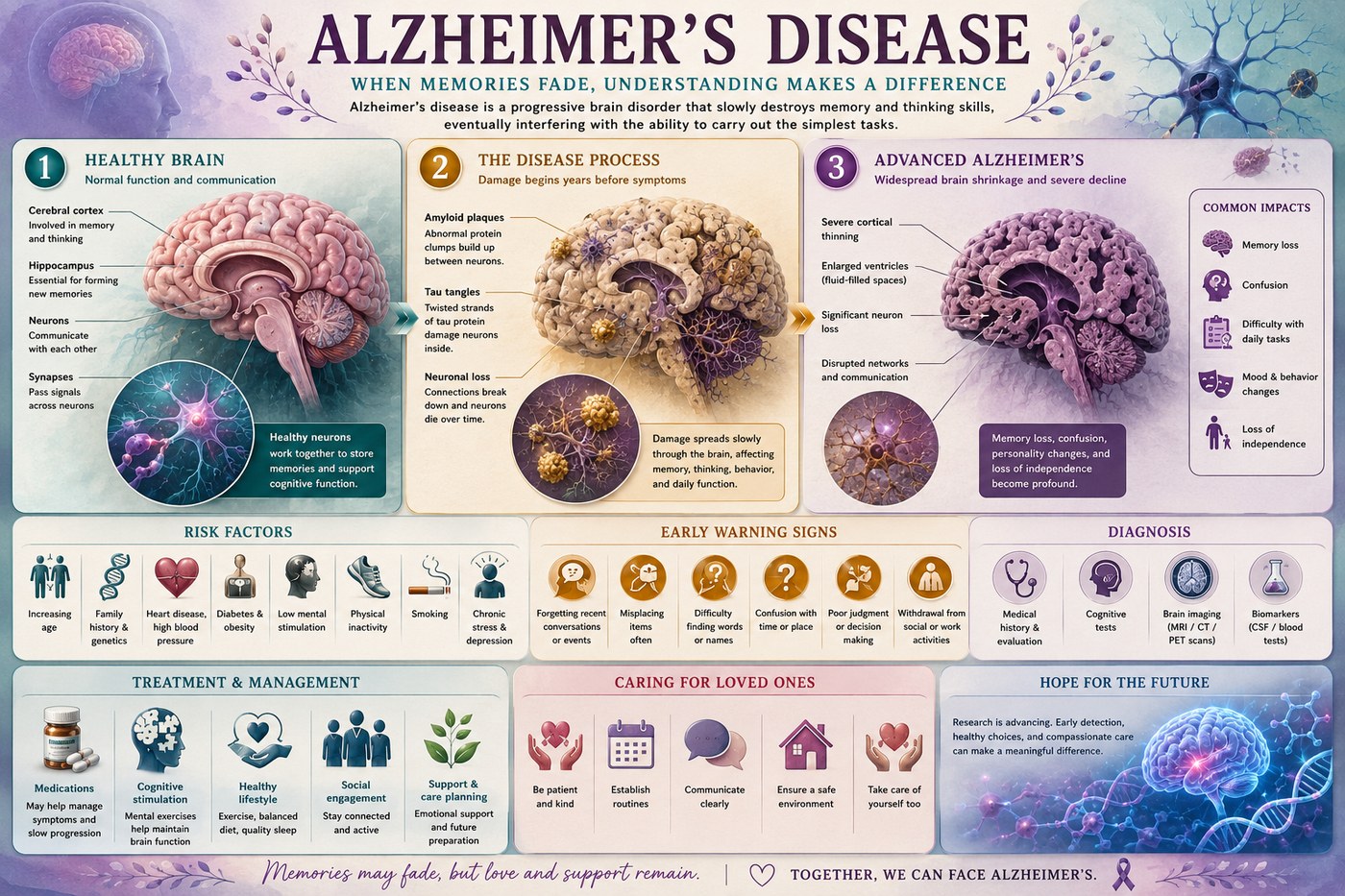
Alzheimer's disease is increasingly understood as a metabolic disorder of the brain — sometimes described as type 3 diabetes. Neurons in the Alzheimer's brain develop insulin resistance: the glucose transporters (GLUT1 and GLUT3) that normally shuttle glucose across the blood-brain barrier and into neurons become impaired, and cells progressively starve even when blood glucose is normal. PET scanning with FDG (a radioactive glucose analogue) shows this hypometabolism in the temporal and parietal lobes years — sometimes decades — before clinical cognitive symptoms appear.
"One reason this idea has gained attention is because the brain's ability to use glucose can decline early in Alzheimer's disease."
Ketone bodies bypass the failed glucose transport system entirely: they cross the blood-brain barrier via monocarboxylate transporters (MCT1) that are not impaired in Alzheimer's disease. This is the mechanism exploited by the MEND and KetoFLEX protocols developed by Dr. Dale Bredesen, and by the MCT oil supplementation approach studied by Dr. Mary Newport, whose husband Steve's case is among the most documented early examples of metabolic rescue in Alzheimer's disease. Ketones do not cure Alzheimer's — they rescue the neurons that are metabolically struggling but not yet dead.
Five stories
Ruth — Early-onset Alzheimer's
Ruth, 58, noticed her first cognitive symptoms — difficulty with word retrieval and getting lost on familiar routes — five years before diagnosis. When her FDG-PET showed significant temporal hypometabolism, her neurologist referred her to a metabolic memory programme. She implemented MCT oil supplementation and a low-carbohydrate diet. Her cognitive assessments stabilised over the following year — not improvement, but absence of the decline her trajectory had predicted. She now participates in a longitudinal ketogenic diet trial for early-stage Alzheimer's.
George — MCI converting to Alzheimer's
George, 71, had mild cognitive impairment that had progressed despite aggressive cardiovascular risk factor management. His daughter, a nurse, researched the metabolic theory of Alzheimer's and introduced MCT oil supplementation combined with time-restricted eating. Within three months George's family reported visible improvement in conversational fluency. His neuropsychological testing six months later showed stabilisation — he had not declined on any measure. His neurologist attributed the stabilisation to the metabolic intervention.
Helen — APOE4 homozygous early intervention
Helen, 52, had genetic testing that revealed she was APOE4 homozygous — carrying two copies of the highest genetic risk factor for Alzheimer's disease. She was cognitively normal but statistically at high risk of early onset. She implemented the KetoFLEX 12/3 protocol — ketogenic nutrition combined with extended overnight fasting. Annual FDG-PET scans over four years show her glucose metabolism in the temporal and parietal lobes stable. She regards the metabolic intervention as the only evidence-based preventive measure available to her.
Frank — Alzheimer's with metabolic syndrome reversal
Frank, 67, had Alzheimer's disease alongside type 2 diabetes and obesity. His neurologist argued the metabolic syndrome was accelerating his cognitive decline through two mechanisms: elevated insulin driving amyloid accumulation, and cerebrovascular damage reducing brain blood flow. A ketogenic diet reversed his type 2 diabetes within four months and produced measurable reduction in amyloid-related inflammatory markers. His cognitive decline slowed markedly in the year following metabolic reversal.
Mei — Spouse-implemented protocol
Mei's husband, 74, had moderate Alzheimer's and was no longer capable of making dietary decisions. Mei, having studied the MCT oil literature, introduced coconut oil and later pure MCT oil into his daily nutrition. Within two weeks she noticed improvements in recognition and verbal fluency that she documented carefully. She shared these observations with his neurologist who agreed to formalise the nutritional intervention and monitor its effects over six months. The improvements — modest but consistent — persisted throughout the monitoring period.