How to Change: Peterson on Transforming Personality
Personality is one of the most heritable things about a human being — and the standard finding in personality psychology was that it was largely fixed by early adulthood. Peterson pushes against this without denying it. What can actually change, what cannot, and the slow voluntary work that distinguishes the two.
Personality is one of the most heritable things about a human being. The standard finding in personality psychology, sustained across decades of research, was that temperament was largely fixed by early adulthood—that where you sat on the major dimensions at twenty-five predicted with uncomfortable accuracy where you would sit at sixty. Jordan Peterson's clinical position pushes against this without denying it. People can change in real, measurable ways, he insists—not through a single insight or a wish, but through a specific kind of work he has spent decades watching succeed and fail. The change is not in becoming a different person; it is in becoming a more capable version of the person you already are. This essay walks through what he says that work actually looks like.
What personality actually is
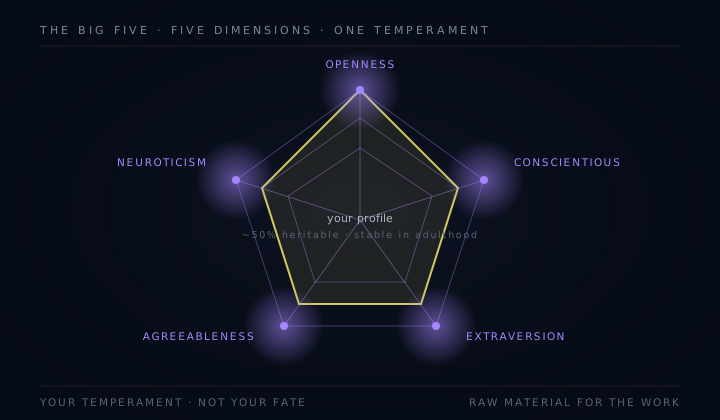
Peterson uses the Big Five framework constantly: openness, conscientiousness, extraversion, agreeableness, neuroticism. Each is a dimension, not a category. Each is substantially heritable. Where you sit on each at twenty correlates strongly with where you will sit at sixty. This is the baseline. Conscientiousness, Peterson notes, "is associated with industriousness and orderliness. Conscientious people can keep long-term contracts. They tend to abide by their word." The correlation between conscientiousness and IQ is zero—which is remarkable, he points out, and not what you would expect. Agreeableness is trickier, because agreeable people are compassionate and polite, and it is easy to think of that as virtuous, but disagreeable people who are competitive and critical also possess virtue. There is no correlation between agreeableness and intelligence either. Character and intelligence, Peterson insists, are not the same thing. The goal is not to fight your temperament; the goal is to learn what your temperament actually is, and then to develop the competences your particular configuration is shaped for and the competences it is shaped against.
What can actually change
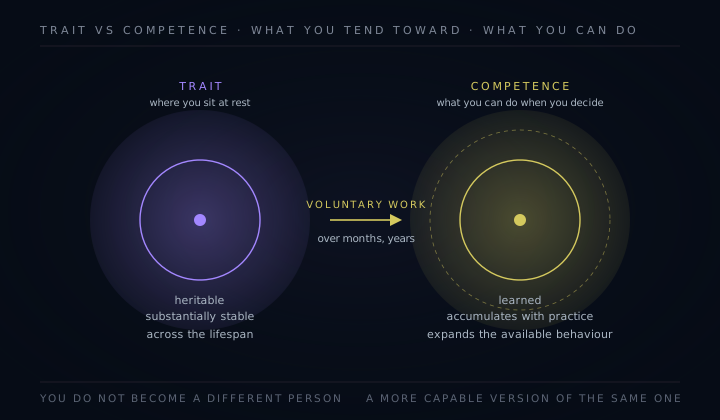
Peterson distinguishes trait from competence. Trait is what you tend toward at rest; competence is what you can do when you decide to. Trait is hard to move; competence is not. A highly disagreeable person can learn to be tactful at work. A highly introverted person can learn to give a public lecture. A highly neurotic person can learn to expose themselves to the thing they fear and reduce that fear. The trait stays roughly where it was. The behaviour the trait used to produce no longer has to. That is, in Peterson's clinical language, what transformation actually means. The introvert does not become an extravert by deciding to; they become more capable of social action by repeatedly choosing to enter the situation and surviving it. Peterson is careful here: this is not self-improvement through force of will. It is the slow construction of a behavioural repertoire that the underlying temperament no longer dictates. The trait remains; the tyranny of the trait does not.
The first move—aim
Change does not begin with self-improvement; it begins with articulating what you are for. Peterson's repeated starting place is aim. He has clinical patients write—in his Self Authoring programme, but more generally as a recommendation—about who they would want to be in three to five years if they were taking care of themselves. The point is not the document. The point is that almost no one has written it down. Once the aim is articulated, the personality system has something to organize itself around, and the small daily decisions stop being arbitrary. Without an aim, the system defaults to trait-driven behaviour: the disagreeable person picks fights, the neurotic person avoids threats, the unconscientious person defers the hard task. With an aim, each decision can be evaluated against something larger than immediate comfort. The aim does not need to be grand; it needs to be yours and it needs to be written.
The mechanism—voluntary exposure
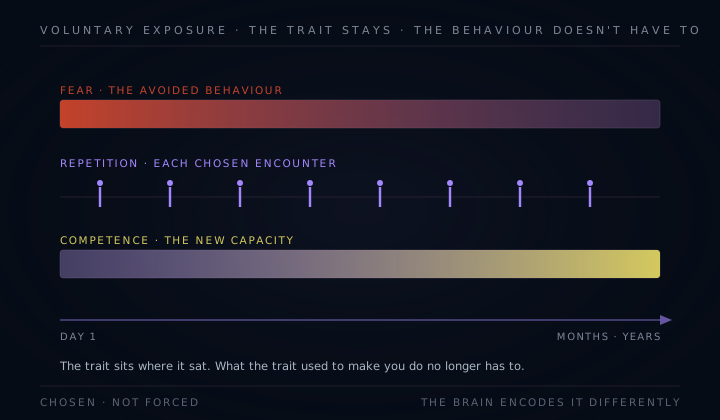
Personality change, where it happens, happens through repeated, voluntary contact with the thing the current personality avoids. The introvert does not become extraverted by deciding to; they become more capable of social action by repeatedly choosing to enter the situation and surviving it. The disagreeable person does not become agreeable; they become more capable of negotiation by practising the harder behaviour. Peterson emphasizes voluntary because forced exposure does not work the same way: the brain encodes the experience differently when the person chose it. The fear shrinks. The competence expands. The trait stays roughly where it was, but is no longer the limiting factor. This is not heroic; it is incremental. The neurotic person does not leap into the centre of the feared situation; they move toward it in steps small enough that the system does not collapse into panic. Each successful exposure rewrites the predictive model the brain is running. The thing that was once avoided becomes, over time, merely difficult.
The shape of the practice
Transformation runs on the timescale of months and years, not insights and weekends. The unit of practice is the next single behaviour. A highly conscientious person already has the machinery for sustained practice; a low-conscientiousness person has to build that machinery as part of the work. The famous "clean up your room" prescription belongs here: the room is not the point; the room is the smallest available unit of evidence that you can intervene in your own environment and have something obey you. Peterson is consistent on this. The work is boring. It is slow. It is the same small action repeated until it becomes automatic, and then the next small action. The introvert does not become socially fluent by attending one party; they become socially fluent by attending fifty parties and paying attention to what works. The disagreeable person does not learn diplomacy by reading a book; they learn it by biting their tongue in the meeting and watching what happens.
Why character matters more than trait
Character, in Peterson's usage, is what you build out of the traits you happened to be born with. A high-neuroticism person who learns to act despite the fear has more character than a low-neuroticism person who never had to act against it. The implication: a fixed trait is not a fixed fate. The trait is the raw material; the character is what is made out of it. This is a conceptual move Peterson makes that most contemporary psychology does not. Intelligence, he says, is not a virtue; it is a responsibility, a gift. Character is what you do with what you were given. The disagreeable person who learns tact has earned something the naturally agreeable person was handed. The neurotic person who acts anyway has forged something the calm person never had to forge.
What gets in the way
The obstacles Peterson sees most often are predictable. The first is the lack of an articulated aim; the system has nothing to organize around, and so defaults to whatever the trait produces. The second is the avoidance of the necessary exposure; the person stays comfortable and the trait keeps producing the same behaviour. The third is what he calls the false self—the version of the person that was assembled out of what other people wanted and now has to be voluntarily disassembled. The fourth is resentment, which the unconscious produces to keep the person from having to confront what they actually need to do. Resentment is seductive because it provides a narrative in which the person is justified in their stasis. The world is unfair; the people are corrupt; the system is rigged. All of which may be true, but none of which absolves the person of the work of becoming competent.
What the research actually shows
Personality traits do shift across the lifespan in ways that are statistically real. Conscientiousness rises through the twenties and thirties for most people. Neuroticism declines slightly into the forties. These are population-level findings, not destiny. Targeted interventions—therapy, structured exposure, the kind of writing exercises Peterson recommends—produce trait-level changes that are smaller than people hope and larger than the mid-century textbook said. The shape of change is real; the magnitude requires patience. The research does not support the idea that you can radically transform your temperament through will alone, but it does support the idea that you can move the needle, and that the competences you build around the trait matter more than the trait itself.
You will not become a different person. You will, with patience and the right work, become a more capable version of the person you already are—with more of your traits put to use and less of them left to govern you by default. That, in Peterson's clinical telling, is what change actually is.